Porta potty placement checklist for Bend driveways, backyards and jobsites
Ten things to check before the truck arrives, so the driver sets the unit where you want it the first time.
The checklist
A porta potty needs a level spot within 15 feet of where a 26-foot truck can park, a path at least 36 inches wide with no steps, 14 feet of clearance under wires, firm ground, an unlocked gate, dogs inside, and a cone or ribbon marking the spot. Accessible units need truck access within 10 feet and an 8-by-8-foot pad.
- Level. A unit on a slope rocks and the door swings. The final pad can be gravel, concrete, asphalt or dry lawn; a sloped driveway is fine if the pad at the top or side is flat.
- Within 15 feet of the truck. The service hose reaches 15 feet. Beyond that the unit cannot be pumped.
- Path width. 36 inches for a standard or deluxe unit on a dolly; no steps or curbs over 6 inches.
- Overhead. 14 feet under wires, eaves and branches for the truck; the unit itself is 91 inches tall.
- Firm ground. Soft lawn after irrigation, fresh topsoil and snow need a pallet or plywood base.
- Gate and dogs. Gate unlocked or code on file; dogs inside on delivery and service days.
- Mark the spot. Cone, ribbon, stake or a photo emailed to dispatch.
- Not in the street. City of Bend right-of-way (street, bike lane, sidewalk) needs a permit from Private Development Engineering.
- Downwind. West winds in summer; put the unit east of patios and tents.
- Shade. Afternoon shade cuts summer odor; a sunny spot helps in winter.
What good placement looks like
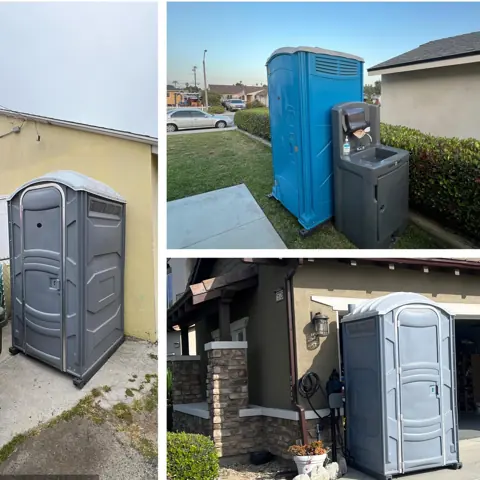
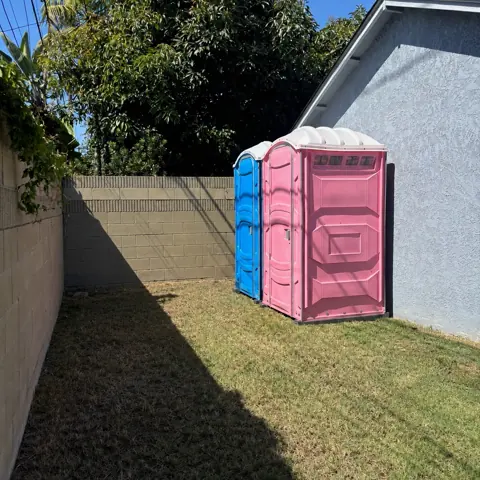
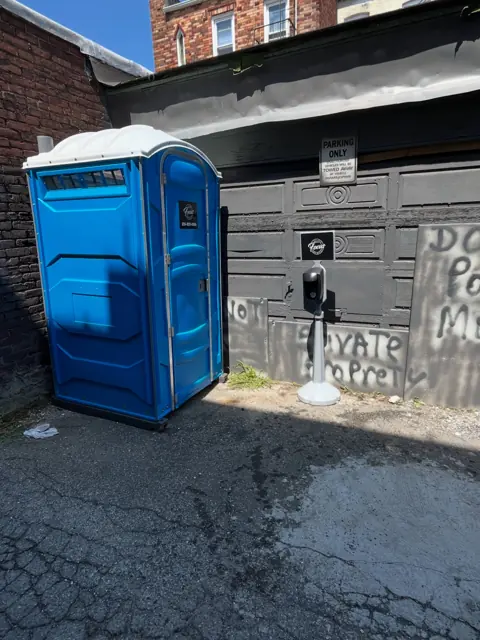
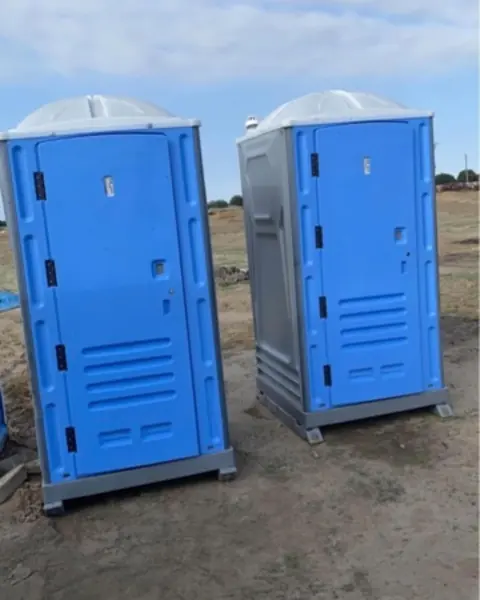
Backyards behind a house
A unit reaches a backyard when a side gate at least 36 inches wide opens onto a path with no steps, and the back pad is within 15 feet of where the truck parks on the street or driveway. On deep lots where the back pad is 40 feet from the street, the unit goes beside the house instead.
Our service truck carries a 15-foot hose, so a unit can sit up to 15 feet from where the truck can park. A single-width gate (36 inches) is wide enough for a standard unit on a dolly.
Sloped driveways on the west side
Awbrey Butte, Summit West and River West driveways often drop 10 to 15 percent. The service truck stops at the street and the driver rolls the unit up on a dolly if the grade is under about 10 percent. Steeper than that, the unit sits at the street end of the driveway or on a level landing.
Winter ice on these driveways can move service by a day.
If the driver cannot get in
If the gate is locked, a car blocks the pad, a dog is loose or the path is unsafe, the driver calls the number on the order and waits ten minutes. If nothing changes, the visit is logged as a trip charge and rescheduled for the next route. A lockbox code on file prevents nearly every missed visit.
Questions people ask us before they book
Can a porta potty go on grass?
On firm, dry lawn. After irrigation or rain the unit sinks unevenly; we set a pallet base when the ground is soft.
Can it go on a slope?
The final pad must be level. A sloped driveway works when there is a flat landing or the unit sits at the bottom by the street.
Does the unit need to be near a water or power line?
No. Standard, deluxe and accessible units need no hookups. Only restroom trailers need a hose bib and an outlet.
How close does the truck need to get?
Within 15 feet for standard and deluxe units, within about 10 feet for the accessible unit, which moves on a pallet jack.
Are there rules about where it has to be?
On private property, no City rule applies. In a public street, bike lane or sidewalk, the City of Bend requires a right-of-way permit. Jobsites must keep units out of hoist paths and trenches under OSHA.
Get a quote for your placement and delivery
Tell us about your placement and delivery and dispatch replies within 15 minutes, Monday to Saturday. For the fastest answer, call (541) 208-0264.
We use your details only to quote and deliver. Privacy policy.
Ready to book? Call and we check your address while you are on the line.
Same-day delivery in Bend when you call before noon. Itemized quotes in minutes.